English
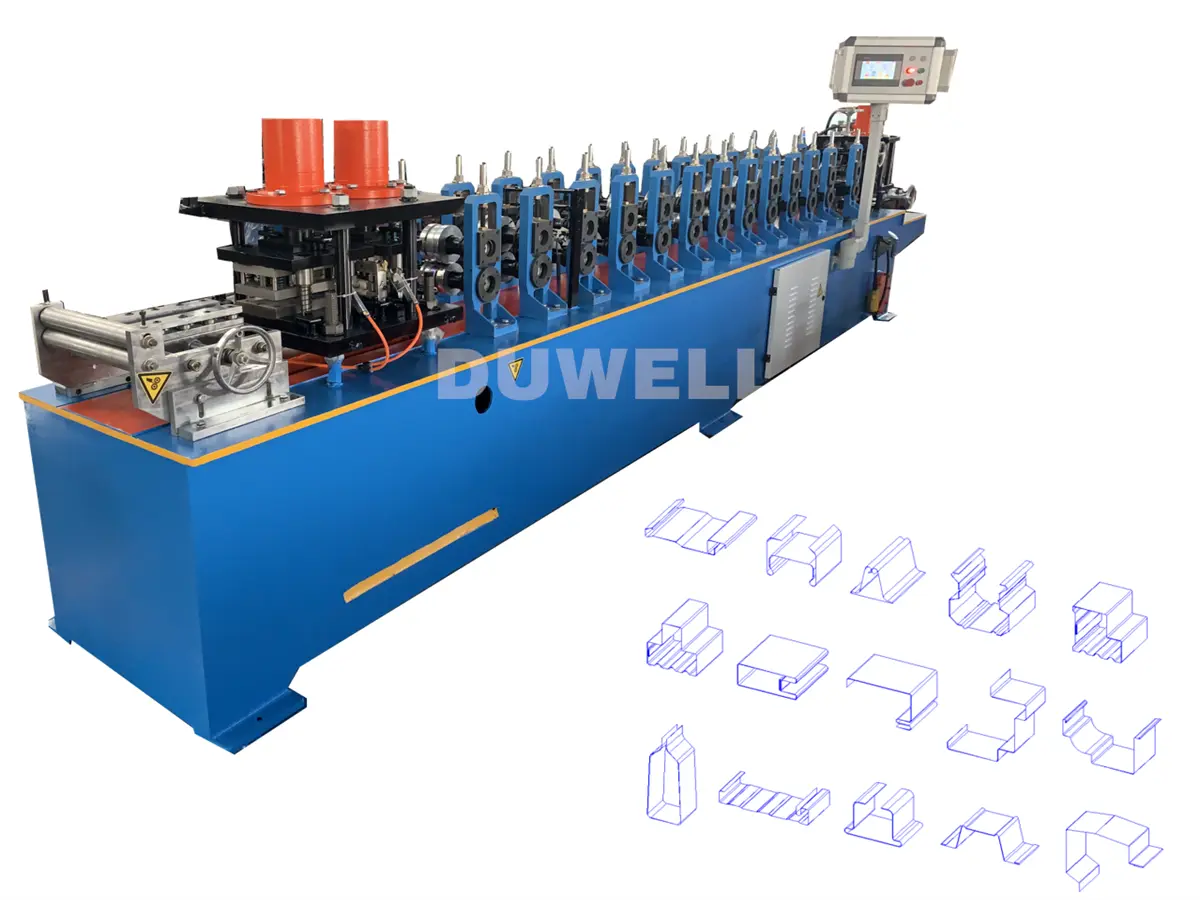
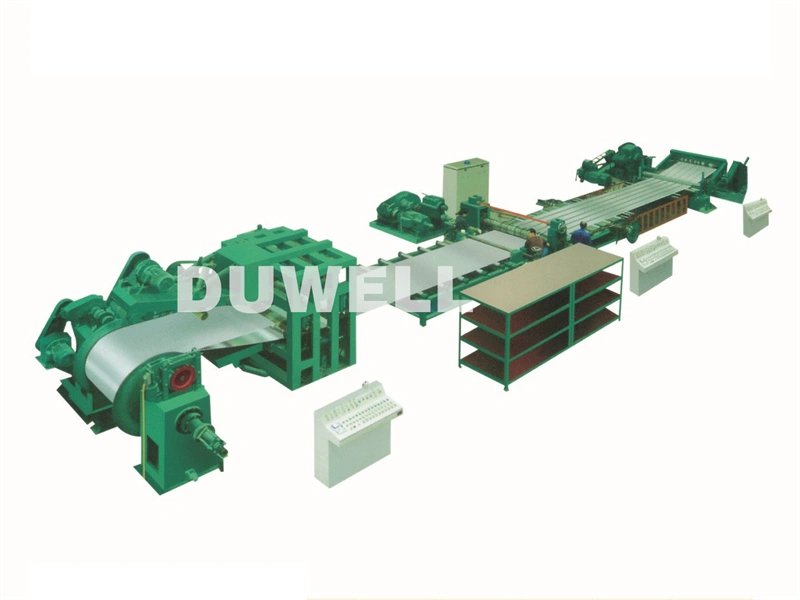
As the global demand for residential and commercial garage doors continues to grow, manufacturers are seeking efficient, reliable, and cost-effective production solutions. A Single Layer Garage Door Panel Production Line has become one of the most popular choices for producing durable and attractive garage door panels with high productivity and consistent quality.
This article explores the working process, advantages, applications, and key features of a single layer garage door panel production line, helping manufacturers understand why this equipment is an excellent investment for the garage door industry.
What Is a Single Layer Garage Door Panel Production Line?
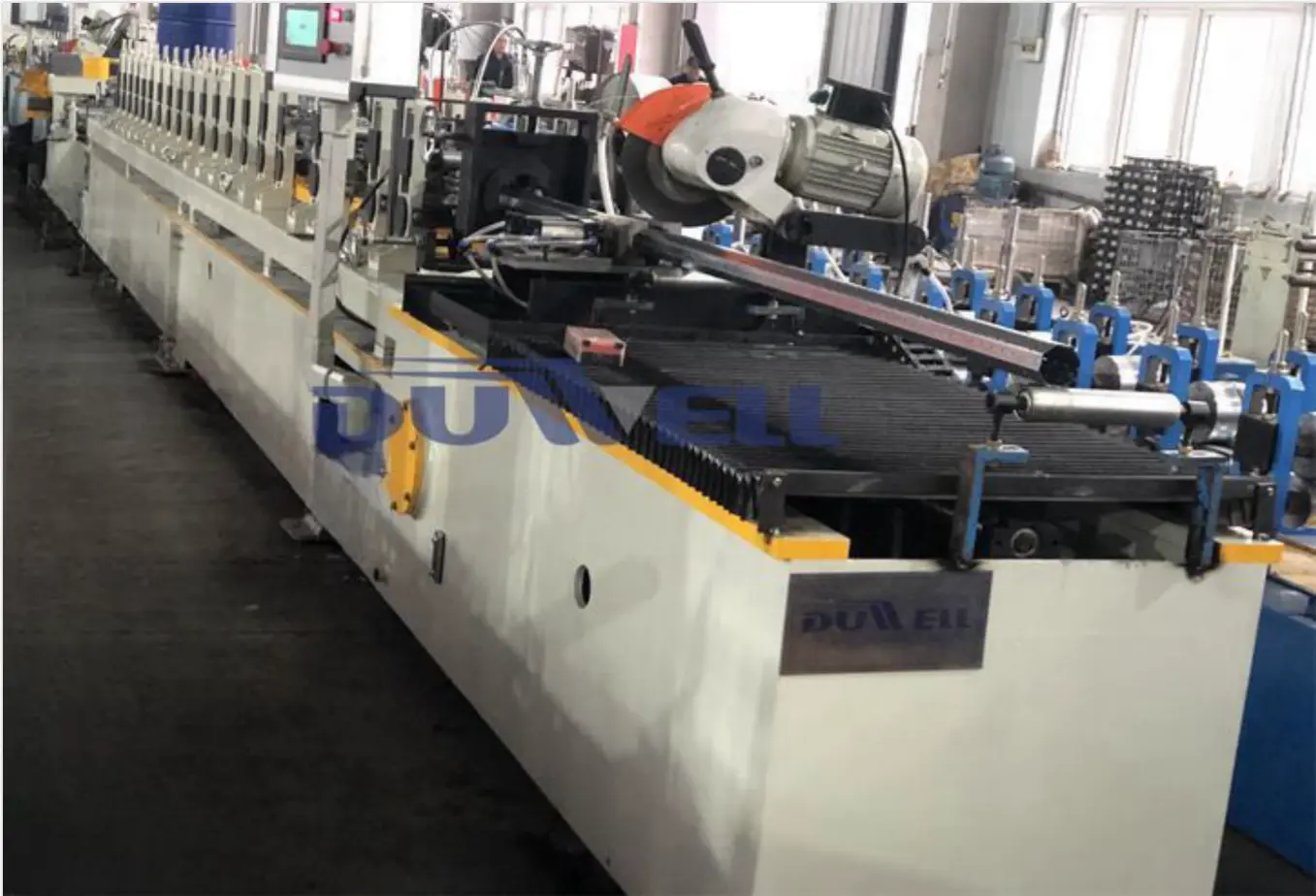
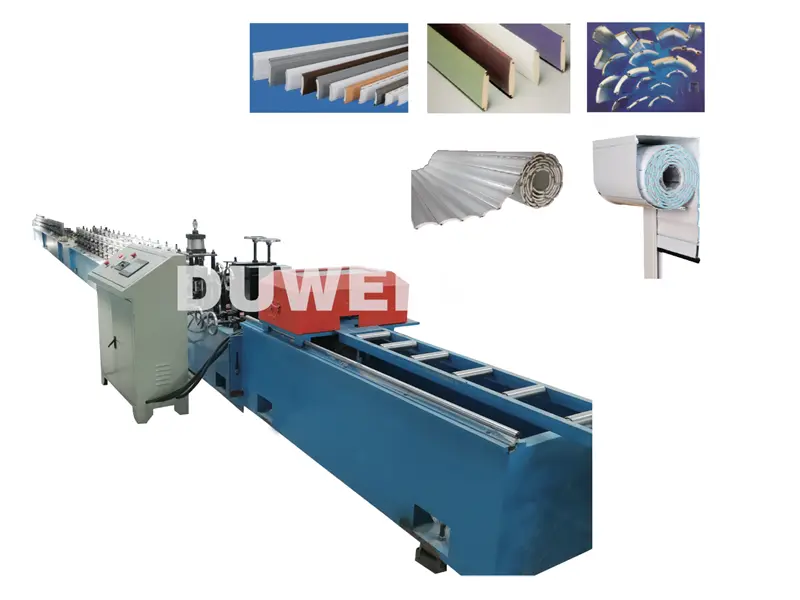
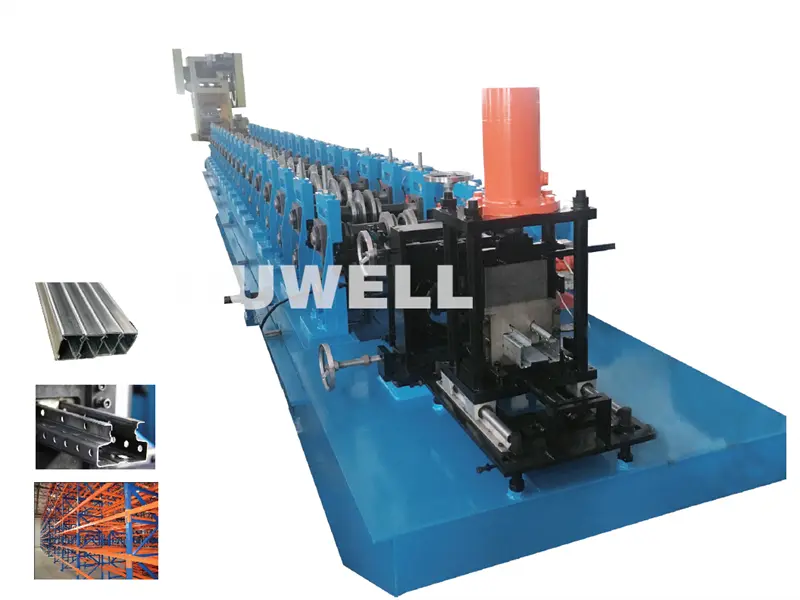
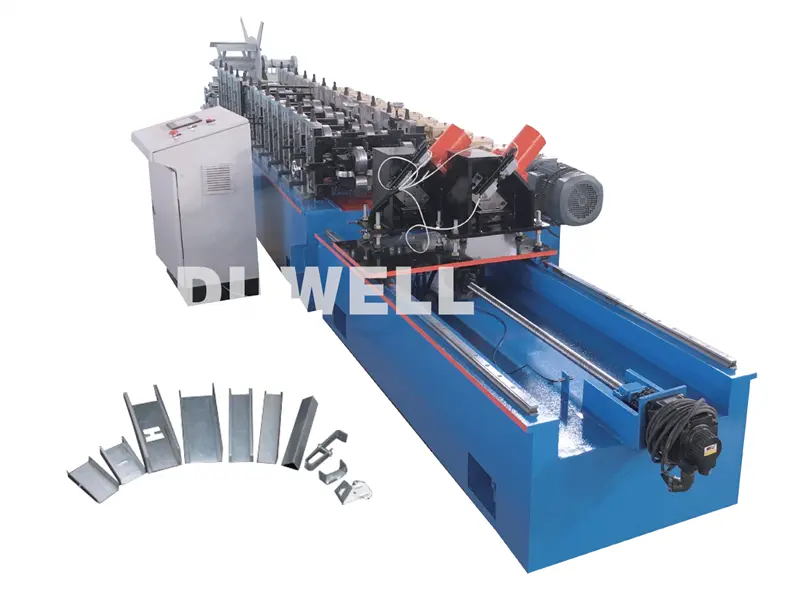
A Single Layer Garage Door Panel Production Line is a specialized roll forming system designed to manufacture single-skin steel or aluminum garage door panels continuously from metal coils.
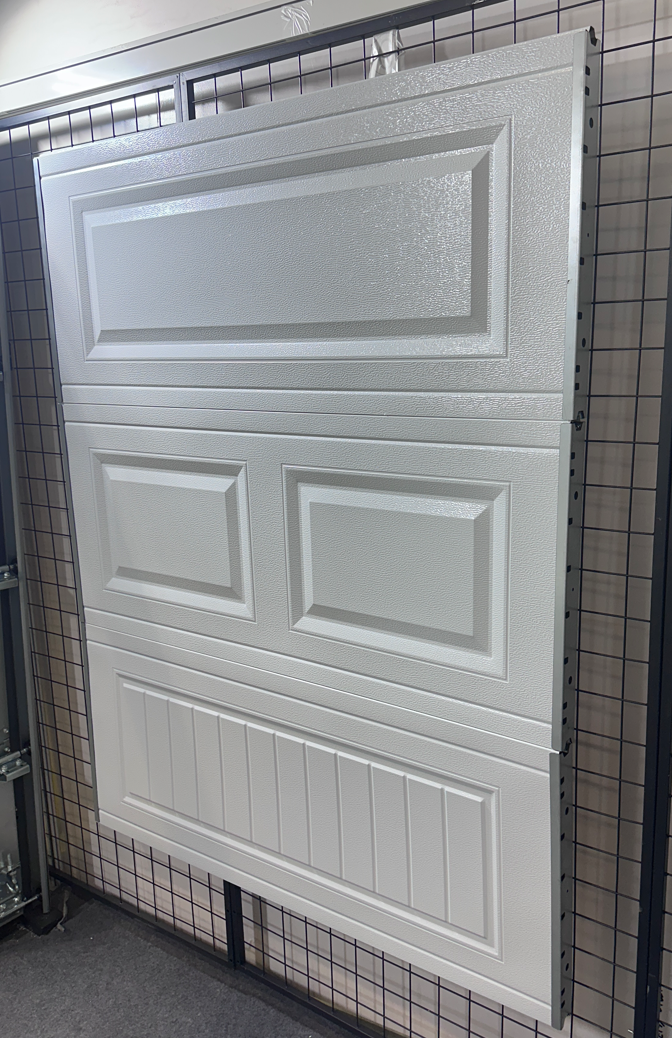
Unlike insulated sandwich garage door panels, single layer panels consist of one metal sheet formed into a specific garage door profile. These panels are widely used in economical residential garage doors, commercial doors, storage facilities, workshops, and industrial buildings.
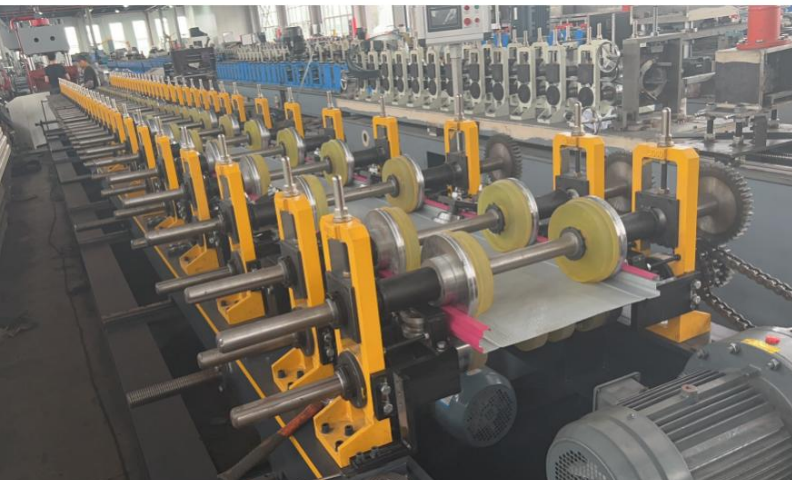
The production line transforms flat metal coils into finished garage door sections through a series of precision forming operations.
Main Components of the Production Line
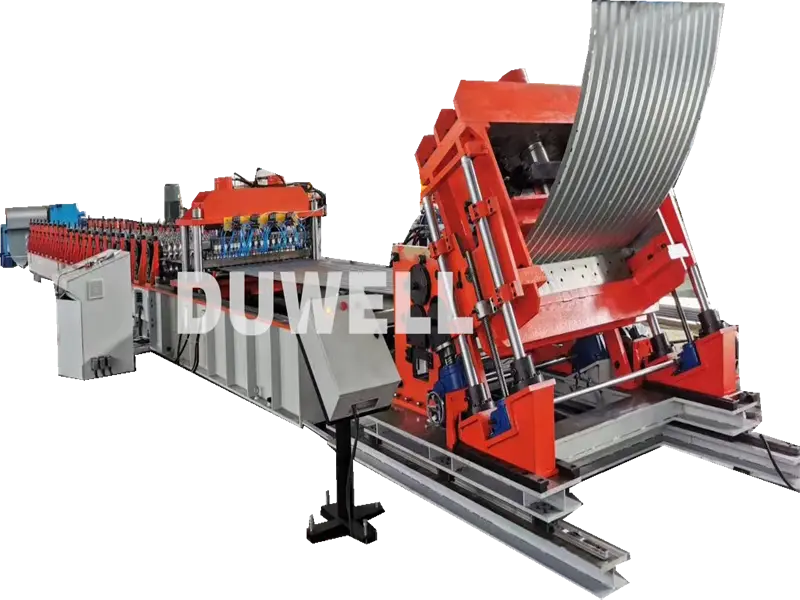
A complete single layer garage door panel production line typically includes:
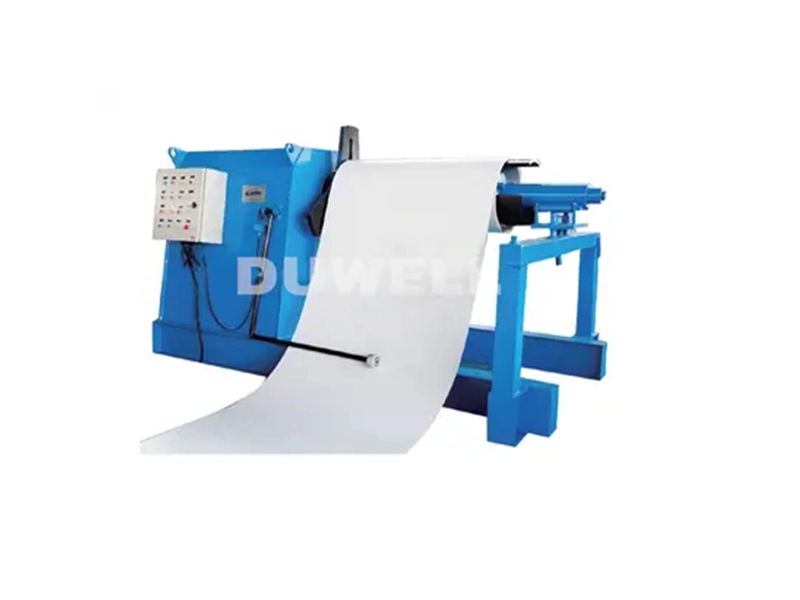
• Hydraulic Decoiler
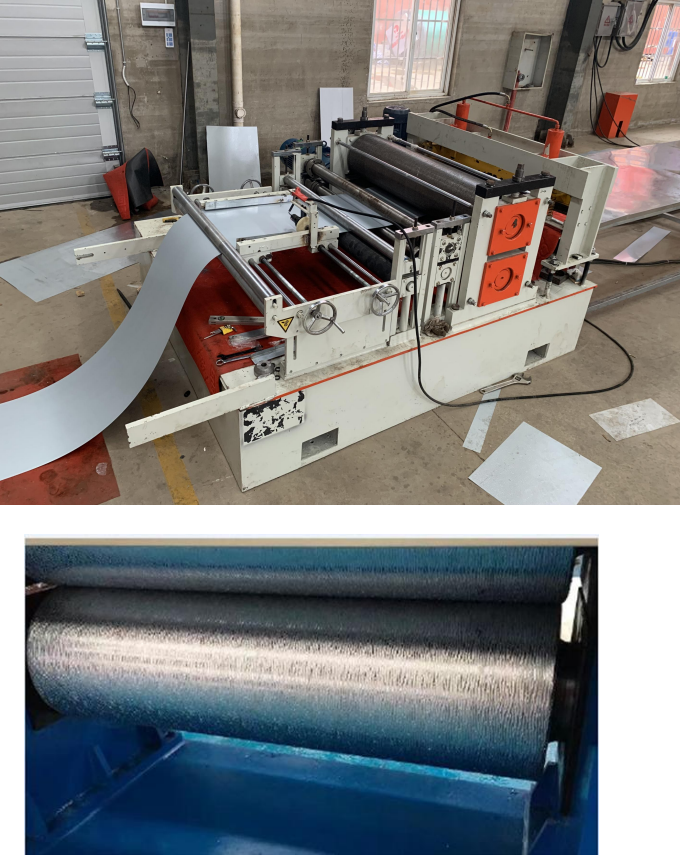
• Embossing Machine (Optional)----Emboss the surface
• Feeding and levelling device
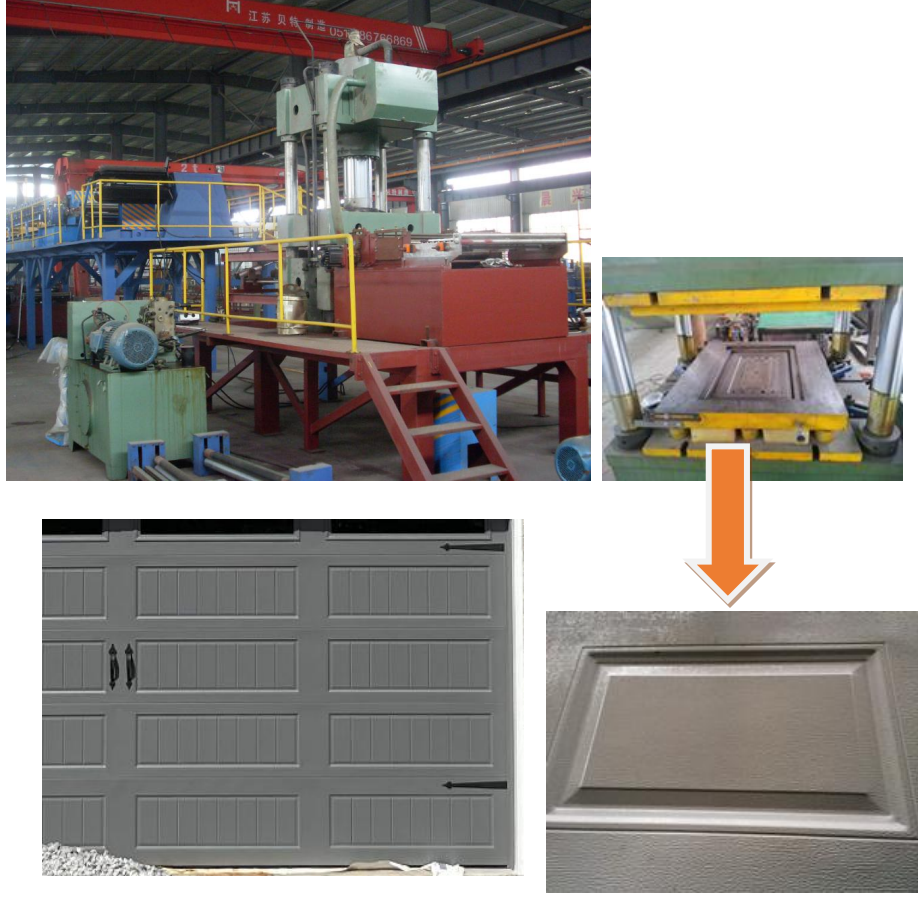
• Pressing machine(Optional)----Press the square on the panel
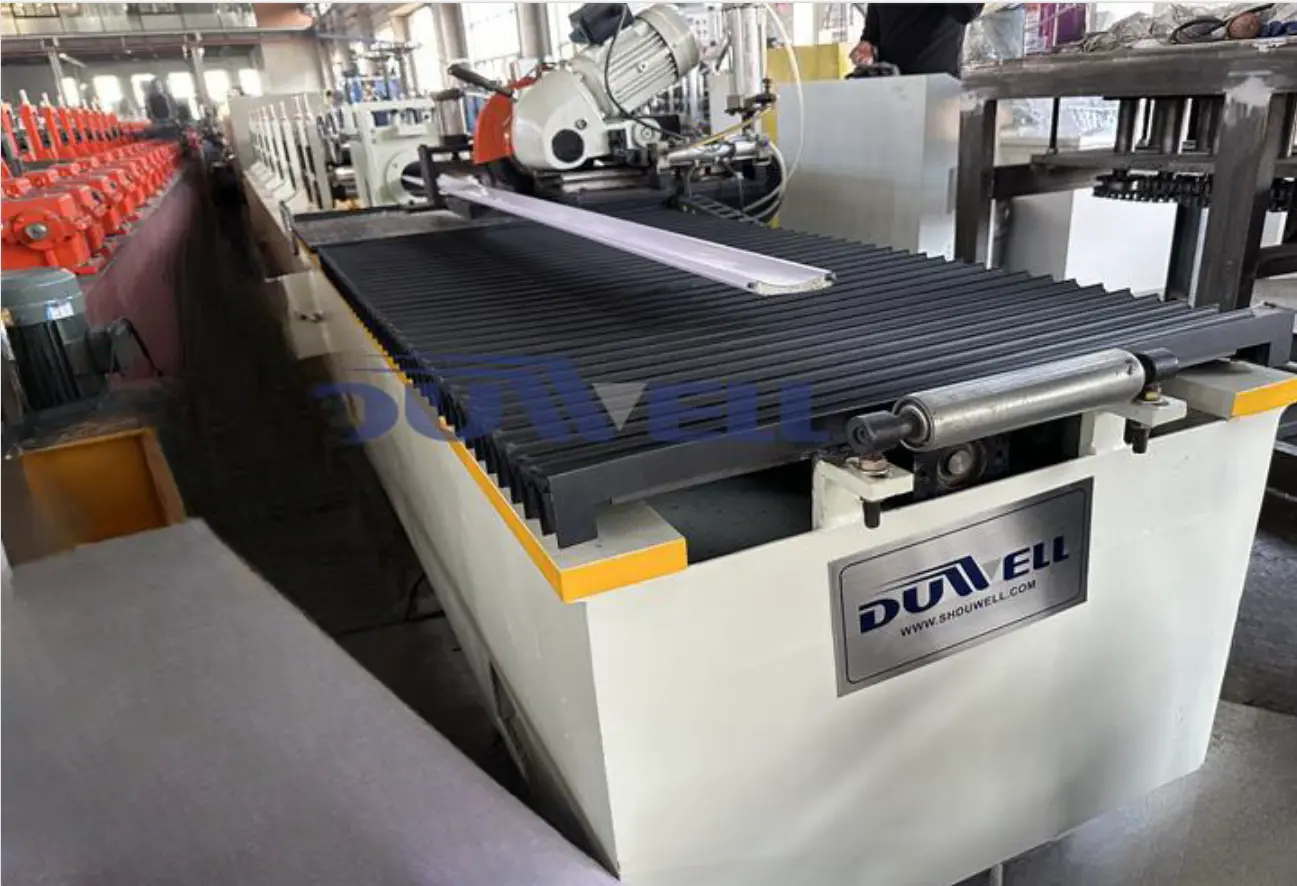
• Hydraulic cutting
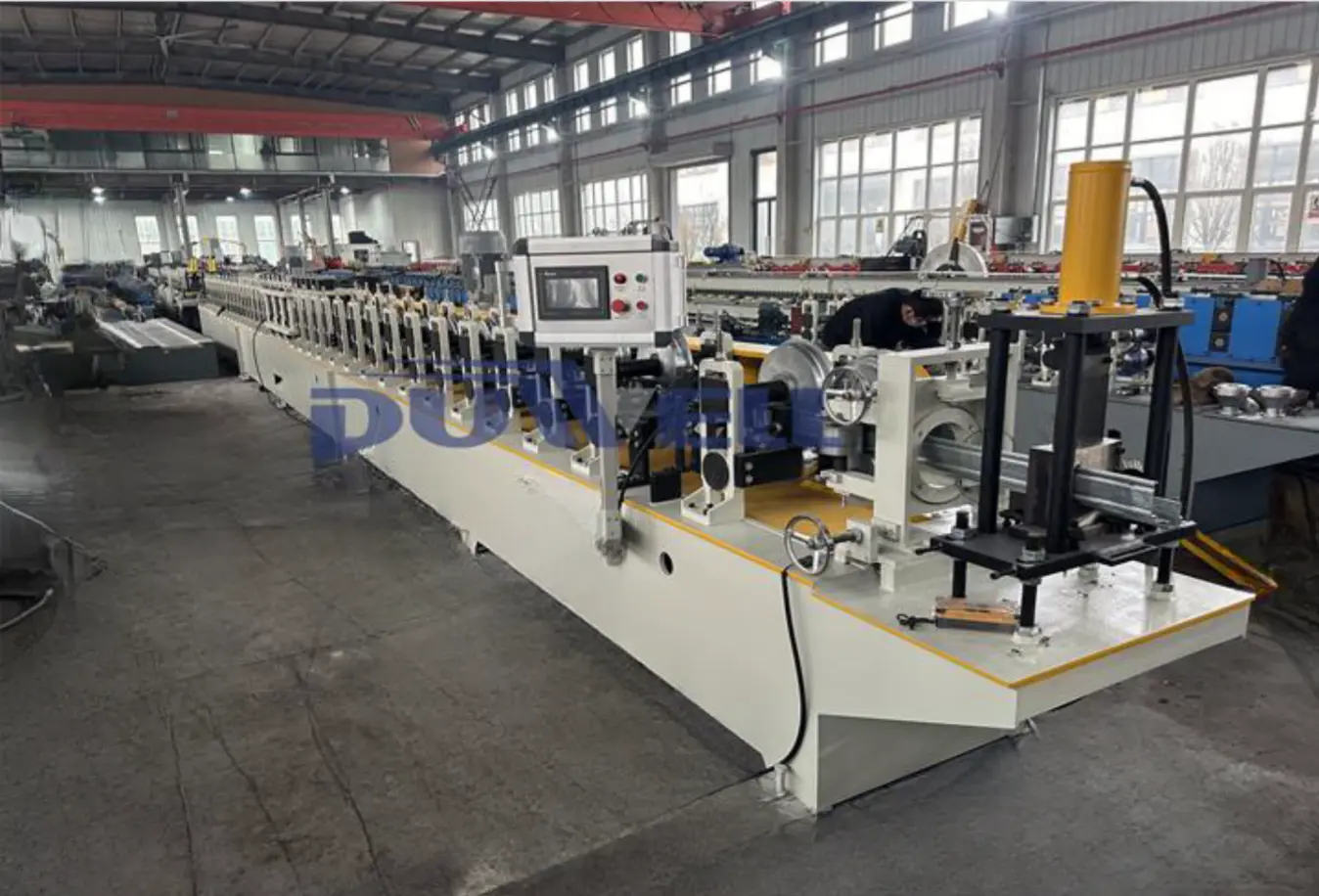
• Roll Forming Machine
• Out table
• PLC Control System
Each component is designed to ensure smooth operation, high efficiency, and precise product dimensions.
Manufacturing Process
The production process is highly automated and consists of the following steps:
Step 1: Coil Loading
Steel or aluminum coils are loaded onto the hydraulic decoiler.
Step 2: Material Feeding
The coil material is automatically fed into the roll forming machine.
Step 3: Profile Forming
Multiple roll forming stations gradually shape the metal into the required garage door panel profile.
Step 4: Embossing (Optional)
Woodgrain, stucco, orange peel, or customized patterns can be embossed onto the panel surface.
Step 5: Pressing machine
Press the short or long square on the panel
Step 6: Automatic Cutting
The servo tracking cutting system cuts panels to the desired lengths without stopping production.
Step 7: Out table
Take the finished panels
Advantages of Single Layer Garage Door Panels
Cost-Effective Production
Single layer panels require less material and lower production costs compared with insulated sandwich panels.
High Production Speed
Modern roll forming technology allows continuous manufacturing with minimal downtime.
Lightweight Structure
Single layer panels are lighter, making installation and operation easier.
Attractive Appearance
Various surface patterns and finishes can be produced to meet market preferences.
Low Maintenance
The simplified panel structure reduces maintenance requirements during production and installation.
Flexible Design Options
Manufacturers can customize panel widths, profiles, embossing patterns, and colors according to customer requirements.
Applications of Single Layer Garage Door Panels
Single layer garage door panels are widely used in:
• Residential garage doors
• Commercial garage doors
• Agricultural buildings
• Storage units
• Workshops
• Industrial facilities
• Warehouses
• Utility buildings
These panels provide a practical and economical solution for many garage door applications.
Why Invest in a Single Layer Garage Door Panel Production Line?
Increased Productivity
Automated production significantly increases manufacturing output while reducing labor costs.
Consistent Product Quality
Precision roll forming ensures uniform dimensions and professional appearance.
Lower Manufacturing Costs
Continuous production minimizes material waste and improves production efficiency.
Fast Return on Investment
The growing garage door market offers excellent opportunities for manufacturers to recover their investment quickly.
Custom Manufacturing Capabilities
Production lines can be customized according to local market requirements and customer specifications.
Important Features to Consider
When selecting a garage door panel production line, manufacturers should evaluate:
• Material thickness range
• Panel width capacity
• Production speed
• Embossing requirements
• Finger protection design
• Automation level
• Servo cutting system
• Electrical standards
• Future expansion capabilities
A well-designed production line can operate reliably for many years with proper maintenance.
Future Trends in Garage Door Manufacturing
The garage door industry continues to evolve with increasing demand for:
• Modern panel designs
• Woodgrain finishes
• Smart garage door systems
• Improved corrosion resistance
• Higher production efficiency
• Automated manufacturing
Advanced roll forming technology enables manufacturers to meet these market demands while maintaining competitive production costs.
Conclusion
A Single Layer Garage Door Panel Production Line is an efficient and economical solution for manufacturing high-quality garage door panels. With automated production, flexible profile options, and reliable performance, this equipment helps manufacturers improve productivity, reduce costs, and expand their market opportunities.
Whether you are starting a new garage door manufacturing business or upgrading an existing production facility, investing in a modern garage door panel production line can provide long-term competitive advantages and sustainable growth.